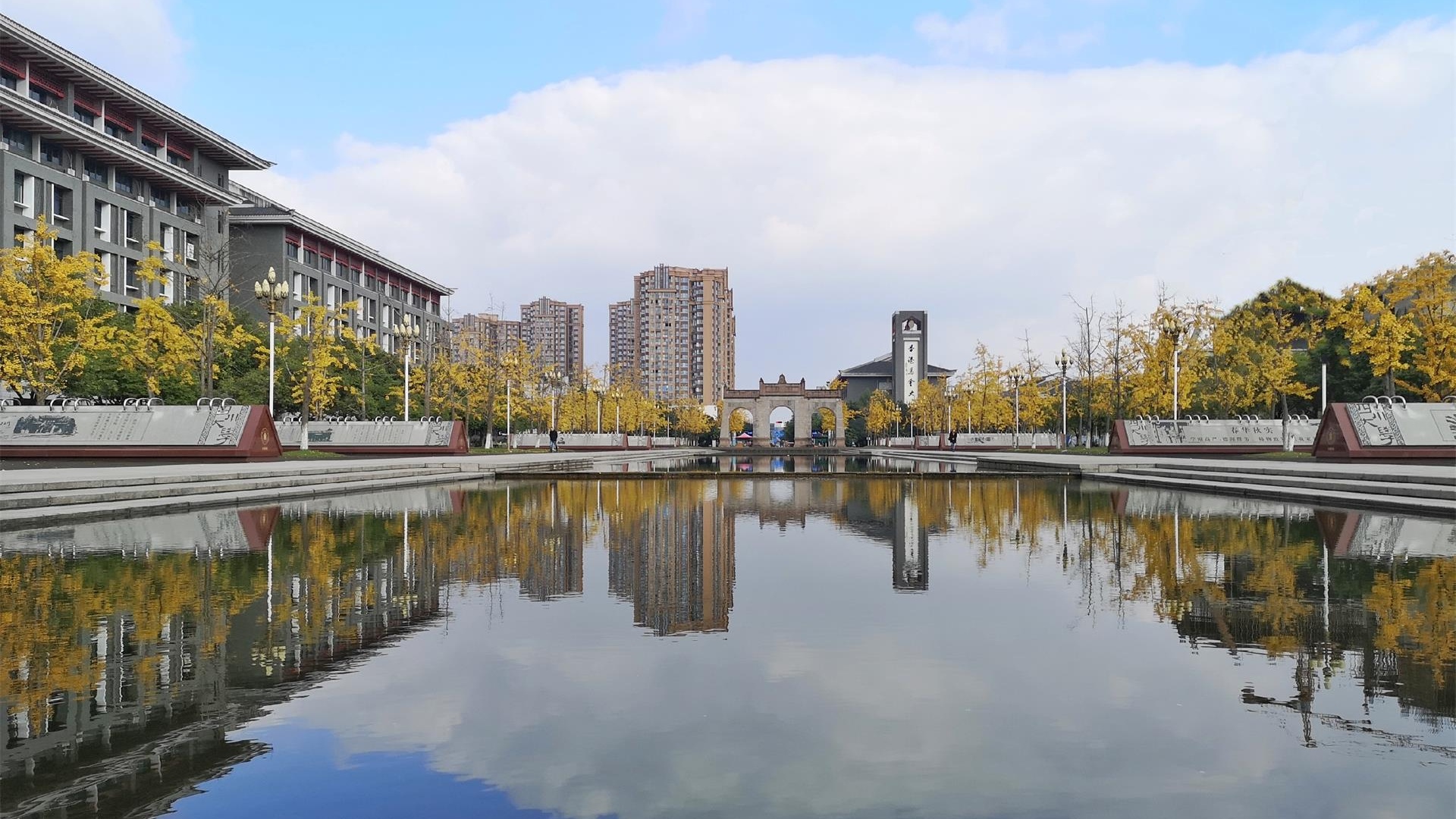
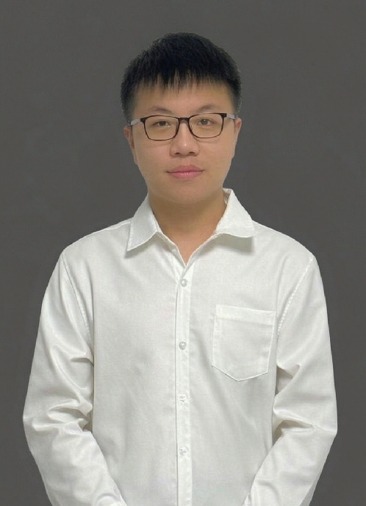
Dr. Li holds a dual-degree Ph.D. from Sichuan University and The Hong Kong Polytechnic University, and a bachelor degree from Southwest Jiaotong University. Dr. Li focuses on the relationship between extreme climate and geohazards responses, utilizing complex system nonlinear methods (machine learning, fractal theory) and geographic information system (GIS). In recent years, Dr. Li has expanded to include the study of human-land relationships on a millennial scale.
Email
jieruili@scu.edu.cn
Representative research results
Papers
[1] Li, J., Adhikari, B. R., Ding, X., et al. (2024). Frequent dry-wet cycles promote debris flow occurrence: Insights from 40 years of data in subtropical monsoon region of Sichuan, China. Catena, 238, 107888.
[2] Li, J., Liu, J., Di, B., et al. (2023). Medical resource accessibility in areas with frequent and hazardous debris flows. International Journal of Disaster Risk Reduction, 95, 103873.
[3] B. Di, J. Li, M. Dandoulaki, et al. Household recovery strategies in Longmen Mountain area, Sichuan, China, following the 2008 Wenchuan earthquake disaster. Natural Hazards (2020), 104, 123-137.
[4] Nienkötter, A., Bian, A., Di, B., Li, J., & Deng, T. (2026). Assessing Debris-Flow Susceptibility at Local and Global Scales: A Deep-Learning-Based Comparative Study of Sichuan, China, and Worldwide. Remote Sensing, 18(9), 1442.
[5] T. Xiong, P. Chen, Y. Mu, X. Li, B. Di, J. Li, Y. Qu, J. Tang, J. Liang, D. Mu. Association between ambient temperature and hypertensive disorders in pregnancy in China. Nature Communications (2020), 11(1): 2925.
Books
[1] Li, J., He W., Qiu, L., Zeng, W., Di, B. Landslide Susceptibility Assessment Based on Machine Learning Techniques. Geomorphic Risk Reduction Using Geospatial Methods and Tools (Chapter). Singapore: Springer Nature Singapore (2024), 3-26.
Awards
(1) Third Prize of the 10th Excellent Scientific Research Achievement Award (Humanities and Social Sciences) from the Ministry of Education, 2026.
(2) Gold Award of the "CCB Cup" Sichuan International College Students' Innovation Competition, 2024.
(3) Silver Award of the "Challenge Cup" Sichuan Provincial College Students' Entrepreneurship Plan Competition, 2024.
Scientific research project
(1) A Predictive Model for Debris Flow Initiation in Dry Valleys Based on Entropy Increase and Chaotic Characteristics of the Source System (42601160) , Young Scientists Fund (Category C) of the National Natural Science Foundation of China, Jan. 2027–Dec. 2029, ¥300,000, Principal Investigator.
(2) Study on the Response Relationship Between Ancient Shu Settlements and Water Disaster Events on the Southeastern Margin of the Qinghai-Tibet Plateau (U25A20756), Key Support Project of the National Natural Science Foundation of China, Jan. 2026–Dec. 2029, ¥2,580,000, Participant.
(3) Intelligent Prevention and Control Strategies for Post-Earthquake Debris Source Transport and Lake Sedimentation in Jiuzhaigou Heritage Site (2023YFE0121900), National Key Research and Development Program of China, Dec. 2023–Nov. 2026, ¥1,500,000, Participant.
(4) Study on the Teleconnection Between Climate Dry-Wet Cycles and Regional Quasi-Periodic Recurrence of Debris Flows (42377168), General Program of the National Natural Science Foundation of China, Jan. 2024–Dec. 2027, ¥490,000, Participant.
(5) Key Technologies and Application Demonstration for Enhancing Grassroots Risk Prevention and Control Capabilities of Major Earthquakes and Their Derivative Disaster Systems in Tibet (XZ202601ZY0243) , Science and Technology Planning Project of Tibet Autonomous Region, Jun. 1, 2026–May 31, 2029, ¥2,600,000, Participant.