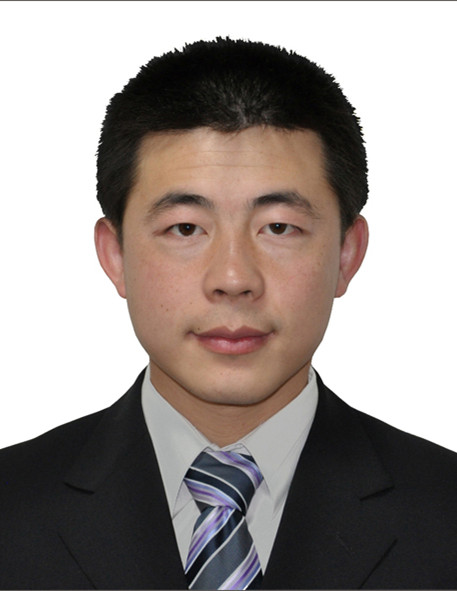
Dr. Bingwei Tian has been teaching at Sichuan University since 2015. He currently serves as Assistant Dean of the Institute for Disaster Management and Reconstruction (IDMR), and Chair of the Department of Urban Safety, Health and Management, as well as Associate Professor. He holds a Master’s degree from the Chinese Academy of Sciences, a PhD from Kyoto University, a postdoctoral fellowship at West China Hospital of Sichuan University, and was a Visiting Scholar at the University of Oxford. He is recognised as an Overseas High-Level Talent of Sichuan Province.
He holds multiple academic appointments: Vice Chair of the Science Popularization Committee of the Seismological Society of China; Member of the Public Safety Standards Committee of the China Emergency Management Society; Member of the Campus Safety and Health Committee of the China Occupational Safety and Health Association; Standing Director and Deputy Secretary-General of the Sichuan Emergency Management Society. He acts as an advisor for the Nepalese Journal of Insurance and Social Security, an editorial board member of Journal of Hazards, Risk and Resilience, and a youth editorial board member of Emergency Management Science and Technology.
His research focuses on international disaster risk reduction and emergency management, including Himalayan disaster risk management, cross-border disaster governance, resilient recovery and reconstruction, urban-rural safety planning, and metaverse-enabled disaster education and service-learning outreach. He has led and participated in more than 60 research and teaching projects in integrated disaster risk reduction and emergency management, including a General Project of the National Social Science Fund of China on regional and international studies, sub-projects of the Key International Cooperative Project of the National Natural Science Foundation of China, and sub-topics of the National Key R&D Program. He has published over 60 peer-reviewed papers, obtained more than 10 authorised patents, authored one monograph and one popular science picture book, and contributed to seven edited books and one atlas. He has submitted more than 10 policy advisory reports, one of which received positive comments from central leadership.
For his outstanding contributions to post-earthquake reconstruction in Nepal, he was awarded the Nepal-China Friendship Award for Post-Disaster Reconstruction presented by the Ambassador of Nepal to China. He has long been engaged in public disaster emergency education and has been covered multiple times by CCTV News.
E-mail:
bwtian@qq.com
Research achievements
Articles
[1] Rongkun Liu, Sainan Li, Bingwei Tian. Participatory Digital Mapping in Mountain Communities: Experiences of Participation, Learning, and Barriers in Nepal’s Himalayas[J]. Mountain Research and Development, 2026.
[2] Renjie Tian, Bingwei Tian, Sainan Li, Basanta Raj Adhikari, Ling Wang, Xiaolong Luo, Wei Xie, Joseph Kimuli Balikuddembe. 2026. "Long-Term Assessment of Urban Flood Resilience and Identification of Obstacles: A Case Study of Sichuan, China (2011–2023)" Land 15, no. 4: 614.
[3] Wei Xie, Chenrui Xuan, Jingjie Wang, Eric Wai Ming Lee, Bingwei Tian. A novel gait-based bipedal social force model for simulating pedestrian dynamics on inclined surfaces[J]. Safety Science, 2026, 197: 107119.
[4] Shuang Wu, Xudong Yang, Bingwei Tian. Research on Search and Rescue of Valuables after Disasters: A Case Study of the Dingri Earthquake[J]. China Emergency Rescue, 2025(04).
[5] Yifan Hu, Bingwei Tian, Ying Chang. Characteristics, Difficulties and Countermeasures of Rescue Operations in High-Altitude Cold Environment: A Case Study of the Mw 6.8 Dingri Earthquake in Xizang[J]. China Emergency Rescue, 2025(03).
[6] Bingwei Tian. Chengdu: A City of Cultural Resilience in the Strategic Rear[J]. China Emergency Management, 2025,(08):81-83.
[7] Yuanfei Wu, Mengying Liu, Bingwei Tian, Renjie Tian, Yifan Hu. (2025). Disaster Resilience Evaluation of Mountain Rural Communities: A Case Study of Typical Villages in the Anning River Basin, Liangshan Prefecture. Tropical Geography,45(04),704-718. Reprinted in full in Information Center for Social Sciences · Geography, Issue 4, 2025.
[8] Mengying Liu, Ling Wang, Bingwei Tian. Comparative Analysis of Research Progress and Hotspots on Urban and Rural Resilience in China Based on CiteSpace Knowledge Graph[J]. Chinese & Overseas Architecture, 2025,(01):43-48.
[9] Yuting Wang, Bingwei Tian, Qi Zuo. Research Progress on Resilience of Urban Road Traffic Networks[J]. Cities and Disaster Reduction,2024,(03):11-15.
[10] Bingwei Tian, Yiran Zhao, Wenqiu Li, Nanyu Yi, Mengying Liu, Yixin Tao, Xin Guo. Emergency Science Popularization Model of Landslide Disasters Based on Embodied Cognition Theory and VR Technology[J]. Journal of Catastrophology,2024,39(02):178-184.
[11] Tao Yixin, Bingwei Tian, Basanta Raj Adhikari, Qi Zuo, Xiaolong Luo, Baofeng Di. 2024. "A Review of Cutting-Edge Sensor Technologies for Improved Flood Monitoring and Damage Assessment" Sensors 24, no. 21: 7090.
[12] Bingwei Tian, Peijing Jia, Xudong Tan, Ruixi Zhou, Yiyang Cai, Yingwei Mao. Construction of Resilience Evaluation Index System for Tourism Communities Facing Natural Hazards[J]. Journal of China Ecotourism,2023,13(05):890-906.
[13] Jiaxin Zheng, Ling Wang, Bingwei Tian, Rui Liang, Yuanfei Wu. International Comparative Study on Planning and Construction Standards of Emergency Shelters[J]. Cities and Disaster Reduction,2023(05):6-22. 2023.09.25
[14] Tian B, Liu W, Mo H, Li W, Wang Y, Adhikari BR. Detecting the Unseen: Understanding the Mechanisms and Working Principles of Earthquake Sensors. Sensors. 2023; 23(11):5335.
[15] Lu Zeng, Ling Wang, Bingwei Tian. Research on Campus Resilience Evaluation of Universities: A Case Study of Jiang’an Campus, Sichuan University[J]. Architecture and Culture, 2022(06):18-19.
[16] X. Gou, B. R. Adhikari, B. Tian, D. Zhao and H. Chen, Ecological Resilience Mapping in a World Natural Heritage Site ― Case Study of Jiuzhaigou, IGARSS 2022 - 2022 IEEE International Geoscience and Remote Sensing Symposium, 2022, pp. 6240-6243.
[17] Bingwei Tian, Qi Zuo, Lixia Zhang, Xiaoyun Gou, Haolun Luo. Research on the Development Path of Smart Scenic Spots in Jiuzhaigou under the Concept of Resilience[J]. Intelligent Building, 2022(5):49-52.
[18] Liu, Litao, and Bingwei Tian. Comprehensive Engineering Frequency Domain Analysis and Vibration Suppression of Flexible Aircraft based on Active Disturbance Rejection Controller, Sensors. 2022; 22(16): 6207.
[19] Qianyi Xue, Yuewei Ling, and Bingwei Tian. Portfolio Optimization Model for Gold and Bitcoin Based on Weighted Unidirectional Dual-Layer LSTM Model and SMA-Slope Strategy[J]. Computational Intelligence and Neuroscience, vol. 2022, Article ID1869897.
[20] Bingwei Tian, Fanfan Zheng. Research Hotspots and Trends of Disaster Emergency Management from the Perspective of Social Sciences: Based on the Analysis of National Social Science Fund Project Data (1983-2021)[J]. China Emergency Management Science,2022(04): 97-109.
[21] Lu Zeng, Bingwei Tian, Tun Wang. The Progress and International Comparison of Earthquake Early Warning Service[J]. Journal of Catastrophology,2022,37(02):138-144,155.
[22] Bingwei Tian. Research on International Disaster Risk Reduction and Emergency Management Cooperation between Chengdu and South Asia from the Perspective of Resilient Belt and Road Initiative[J]. Journal of the Party School of CPC Chengdu Municipal Committee,2021(06):89-96.
[23] Basanta Raj Adhikari, Bingwei Tian. Spatiotemporal Distribution of Landslides in Nepal. In: Handbook of Disaster Risk Reduction for Resilience. Springer International Publishing, Cham, 2021:453–471.
[24] Bingwei Tian. Exploration and Practice of Safety and Emergency Education Model for University Students[J]. China Emergency Management,2021(06):56-58.
[25] Shiyao Gu, Ling Wang, Fei Liu, Bingwei Tian. Building Damage Extraction and Cause Analysis of the Changning Earthquake Based on UAV Images[J]. Journal of Catastrophology,2021,36(01):217-222.
[26] Bingwei Tian, Basanta Raj Adhikari, Subash Thapaliya. An Introduction to Emergency Management in Nepal[J]. China Emergency Management,2020(08):72-75.
[27] Chen Feiyu, Basanta Raj Adhikari and Tian Bingwei. Identification Of Landslide Susceptible Areas For The Proper Settlement Planning In The Kali Gandaki Road Corridor Nepal. IGARSS 2020, pp. 5238-5241.
[28] Shiyan Wang, Bingwei Tian, Baofeng Di. Research on Application of Disaster-Reduction Eco-Art Maps in Green Development[J]. Geospatial Information,2019,17(01):20-22.
[29] Bin Huang, Bingwei Tian, Ling Wang, Shiyao Gu, Feiyu Chen. Spatio-temporal Analysis and Assessment of High-Temperature Heat Wave Disaster Risk in Chengdu,ISBN:978-94-6252-793-5,DOI:10.2991/wrarm-19.2019.9. PP:43-50.
[30] Wang, L., Bingwei Tian., Koike, K., Hong, B., & Ren, P. Integration of Landscape Metrics and Variograms to Characterize and Quantify the Spatial Heterogeneity Change of Vegetation Induced by the 2008 Wenchuan Earthquake[J]. ISPRS International Journal of Geo-Information, 2017, 6(6):164-184.
[31] Bingwei Tian., Wang, L., Kashiwaya, K., Koike, K. Combination of Well- Logging Temperature and Thermal Remote Sensing for Characterization of Geothermal Resources in Hokkaido, Northern Japan. Remote Sensing. 7(3):2647-2667.
[32] Ling Wang, Bingwei Tian, Alaa Masoud, Katsuaki Koike, Relationship between remotely sensed vegetation change and fracture zones induced by the 2008 Wenchuan earthquake, China. Journal of Earth Science, 24(2), 282-296.
[33] Fan J.R., Chen J., Bingwei Tian, Rapid Assessment of the Secondary Disasters Induced by the Wenchuan Earthquake, Computing in Science and Engineering, 12(1), 10-19.
[34] Bingwei Tian, Ling WANG, Katsuaki KOIKE and Jianrong FAN. Analysis and Assessment of Earthquake induced Secondary Mountain Disaster Chains Based on Multi-platform Remote Sensing. IEEE IGARSS 2010., 1214-1217.
[35] Kuifang Gong, Bingwei Tian, Jianrong Fan, Xiangyang Wang, Xiang Guo, Hua Guo, Xiaoyong Liao. Design of Soil Erosion Monitoring Network System in Xizang Autonomous Region. Soil and Water Conservation in China, 8-10.
[36] Ling Wang, Bin Gu, Bingwei Tian. Dynamic Monitoring of Water Bodies in the Upper Min River Based on Remote Sensing Data: A Case Study of Wenchuan County. Journal of Sichuan University (Natural Science Edition),803-808.
[37] Bingwei Tian, Jianrong Fan, Daojie Wang, Jianqiang Zhang, Tao She. Digital Drainage Network Modeling of Upper Min River Basin Based on GeoProcessing. Resources and Environment in the Yangtze Basin 17 (S1), 106-111.
[38] Bingwei Tian, Jianrong Fan. Design and Research of Object-Oriented Map Annotation Database Based on GeoDatabase. World Sci-Tech R&D 30 (3), 324-327.
[39] Jianrong Fan, Jianqiang Zhang, Bingwei Tian, Dong Yan, Heping Tao. Rapid Remote Sensing Assessment of Cultivated Land Damaged by Secondary Disasters of Wenchuan Earthquake: A Case Study of Tangjiashan Area, Beichuan County. Journal of Remote Sensing,2008(6): 917-924.
[40] Jianrong Fan, Bingwei Tian, Genwei Cheng, Heping Tao, Jianqiang Zhang, Dong Yan, Fenghua Su, Bintao Liu. Information Extraction of Dammed Lakes Triggered by the Wenchuan Earthquake Using Multi-Source Remote Sensing Data. Mountain Research, 26 (3), 257-262.
Books
[1] Bingwei Tian. Innovation and Practice of Disaster Reduction Eco-Art Maps[M]. Chengdu: Sichuan Fine Arts Publishing House, 2016.
Popular Science Books
[1] Bingwei Tian, Li Peng, Ying Zhang. Little V's Story of Earthquake Emergency Evacuation[M]. Beijing: China Labor and Social Security Press, 2025.
Awards & Honors
Scientific and Technological Innovation
(1) 2021, Special Prize for Scientific and Technological Achievements, Sichuan Emergency Management Society
(2) 2026, Outstanding Academic Paper (2021–2025), Journal of China Ecotourism
Science Popularization
(1) 2025, Second Prize of Science Popularization, Disaster Prevention and Reduction Science and Technology Award, China Association for Disaster Prevention
(2) 2026, Second Prize, Science Popularization Animation Competition, Beijing Science Communication Contest
(3) 2026, National Outstanding Popular Science Work
Teaching Achievements
(1) 2018, Outstanding Team for the Educational Culture Development (4th Round), Sichuan University
(2) 2022, Second Prize of Sichuan Provincial Higher Education Teaching Achievement Award
(3) 2023, Model Team for the "Dew and Fragrance" Educational Culture Development (8th Round), Sichuan University
(4) 2023, Outstanding Overseas Study Team of the "Sichuan University Vision" Program, Nepal
(5) 2024, Special Prize for Postgraduate Teaching Achievements, Sichuan University
(6) 2024, Outstanding Overseas Study Team of the "Sichuan University Vision" Program, Nepal
(7) 2025, Outstanding Overseas Study Team of the "Sichuan University Vision" Program, Japan
Student Mentoring Awards
(1) 2021, National Champion, Bank of America Youth Leadership Program by Project Hope
(2) 2022, Silver Award, 1st Sichuan University Volunteer Service Project Competition
(3) 2023, Second Prize, 1st Sichuan University Public Welfare Project Innovation Design Competition
(4) 2024, National Silver Award, 7th China Youth Volunteer Service Project Competition
(5) 2024, Gold Award, Sichuan International College Students’ Innovation Competition
Other Honors
(1) 2017, Nepal-China Friendship Award for Post-Disaster Reconstruction
(2) 2021, Outstanding Individual, Sichuan University
Research projects
(1) General Project of the National Social Science Fund of China, Research on International Disaster Rescue and Overseas Communication of China’s National Image under the Belt and Road Initiative, 2024–2027 (PI)
(2) Sub-project of Key International Cooperative Project of National Natural Science Foundation of China, Formation Mechanism of Landslide-Driven Multi-Hazards and Resilient Community Construction in the Trans-Himalayan Economic Corridor, 2024–2026
(3) Key Project of National High-End Think Tank, Research on Early Warning Systems of Major Countries Worldwide, 2024
(4) National Foreign Expert Project, Research on Tourism Resilience Recovery and Enhancement in the China-Nepal-India-Sri Lanka Corridor under the Belt and Road Initiative, 2023–2024 (PI)
(5) National Foreign Expert Project, GIS-Based Educational Cooperation Project for Enhancing Mountain Disaster Resilience in South Asian Countries, 2022–2023 (PI)
(6) Industry-University Collaborative Education Project of the Ministry of Education, Construction of Simulation Platform for Comprehensive Drills in International Disaster Reduction and Emergency Management, 2021–2024 (PI)
(7) Sub-project of Class A Strategic Priority Research Program of the Chinese Academy of Sciences, Mountain Disaster Education and VR Scenario Simulation, 2019–2023
(8) Philosophy and Social Science Planning Project of Chengdu, Research on International Disaster Risk Reduction and Emergency Management Cooperation between Chengdu and South Asia under the Belt and Road Initiative, 2019–2022 (PI)
(9) Emergency Management Project of the National Natural Science Foundation of China, Disaster Risk Assessment of Countries along the Belt and Road: A Case Study of the China-Nepal Highway, 2018–2019 (PI)
(10) Project of Sichuan Foreign Affairs and Overseas Chinese Affairs Office, Research on Disaster Risk Reduction Cooperation Strategy between China (Sichuan) and South Asia under the Belt and Road Initiative, 2017–2018 (PI)
Talent Development
Postgraduate Education
Postgraduate research directions: International Disaster Risk Reduction and Emergency Management, Urban-Rural Safety and Disaster Mitigation Planning, Disaster Education and Science Popularization.
As the principal investigator, he founded the Innovative Program and Micro-Major of International Disaster Risk Reduction and Emergency Management at Sichuan University, and is a core faculty member for the undergraduate major in Disaster Prevention, Mitigation, and Engineering.
Postgraduate Courses
(1) Disaster Informatics and Big Data Science
(2) Urban Spatial Analysis and New Planning Technologies
(3) Laboratory Safety and Emergency Skills
Undergraduate Courses
(1) International Organizations' Strategies for Disaster Reduction and Emergency Management
(2) Application of Artificial Intelligence in Disaster Prevention and Mitigation
(3) Safety Risk Theory and Emergency Skill Practice