At around 10:52 a.m. on August 26, 2026, an exceptionally large and highly destructive ice-rock avalanche–debris flow disaster chain struck the Donglin Zangbo basin in Gyirong County, Xigaze, Tibet Autonomous Region, China, severely damaging Gyirong Port. Immediately after the disaster, the Institute for Disaster Management and Reconstruction (IDMR) assembled a team to assess the event, analyzing its formation and causal mechanisms. Associate Research Fellow Li Yao was dispatched as the first responding expert, departing early on August 27 for the affected area in Tibet. There, he joined a joint expert team comprising the Institute of Mountain Hazards and Environment (Chinese Academy of Sciences), Tsinghua University, Lanzhou University, and other institutions, supporting the emergency rescue operations of the Department of Emergency Management of Tibet Autonomous Region—making the team the first university-based technical force to enter the core disaster zone.
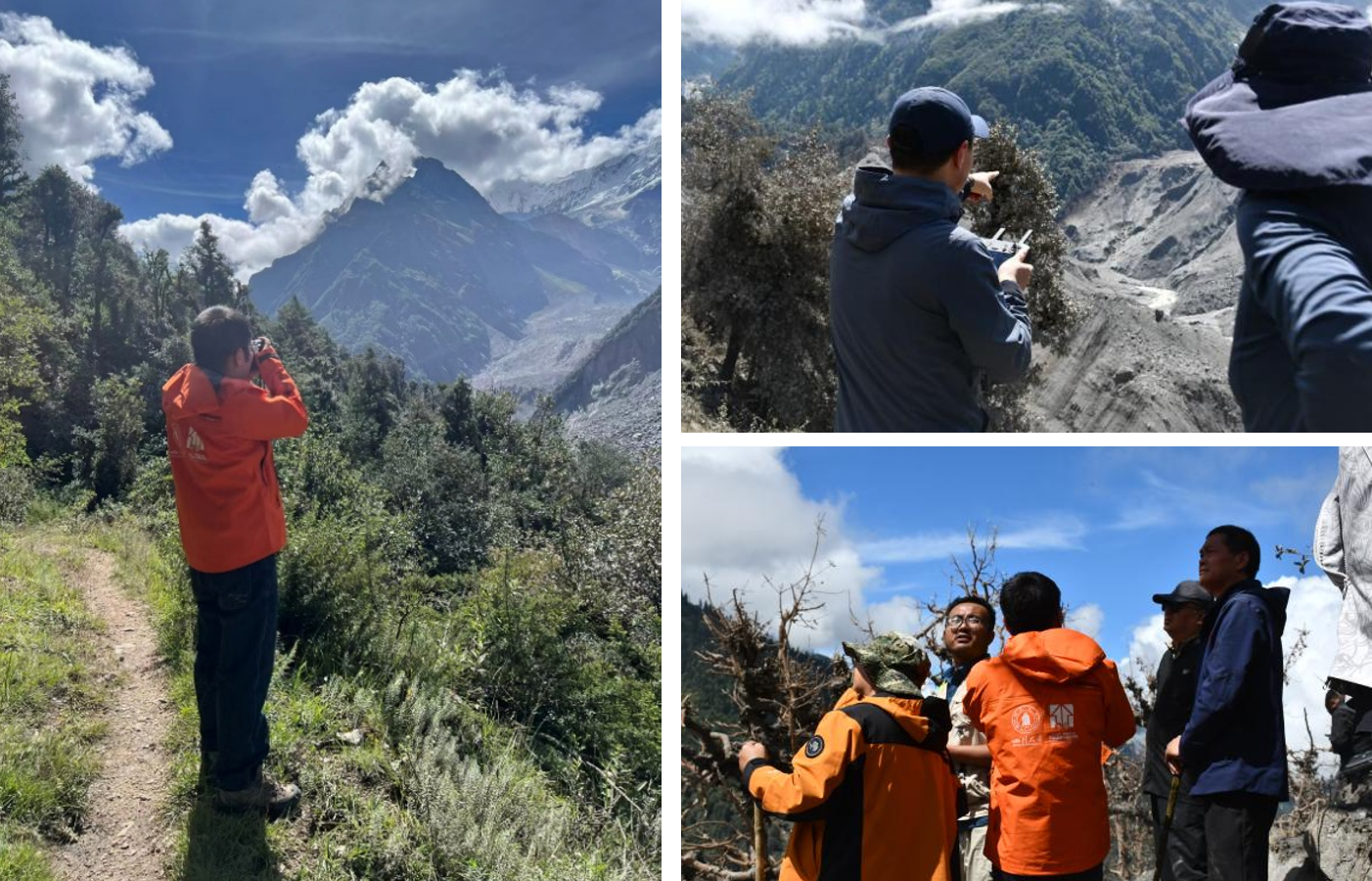
At around 9:00 a.m. on August 28, despite damaged roads and disrupted communications, the joint expert team entered the avalanche source area and conducted UAV-based mapping, obtaining first-hand data on the material composition and terrain of the source zone. The team simultaneously surveyed mud marks, air-blast impact traces, and slopes along the flow path. Based on the field data, the team carried out a preliminary assessment of the breaching risk of the landslide-dammed lake in the upper Donglin Zangbo, and identified a deforming landslide mass downstream of the dam requiring priority attention—providing a direct scientific basis for the safe deployment of rescue forces, secondary-disaster monitoring and early warning, and downstream prevention decisions.
Going forward, the Institute's experts will continue field investigations, with additional personnel ready to be dispatched as needed, while colleagues back home conduct data analysis and secondary-disaster risk assessment in parallel, providing sustained scientific and technical support for frontline rescue and prevention decisions.